← ALL FRESH TAKES
SOURCE-LED EDITORIAL REVIEW
THE DOCUMENTED CONSENSUS
THEMATIC CENTER
the living worldNARRATIVE PRESSURE
decisionFORM
documentaryRECORD ANCHORS
carriage · horse-drawn · animalThe record for Blinders yields three coordinates specific to its premise—carriage, horse-drawn, and animal. That vocabulary places the living world at the center and gives decision its dominant tension. It establishes a documentary baseline, not a borrowed score; criticism must still ask what the form does with that material.
Blinders brings the living world into contact with decision through documentary. That intersection is our Fresh Take: judge the premise less by its familiarity than by how precisely that combination makes its conflict legible. The existing editorial note adds this view: A sensitive, fully inhabited film whose direction lets emotion surface with precision.
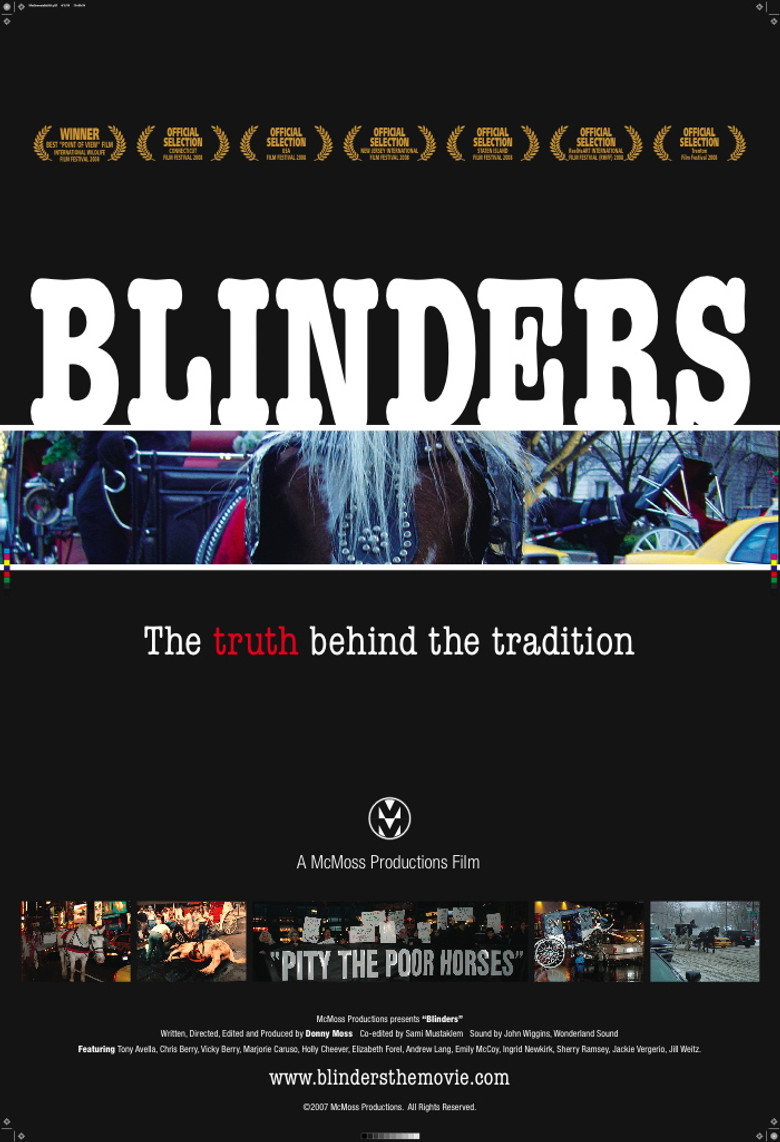
Blinders (2008) arrives with the coordinates of a documentaire film situated in 2000s cinema. The record credits Donny Moss with the direction and places Ingrid Newkirk in the foreground. With an unusually compact form, the useful question is not to invent an invisible intention, but to notice how these documented choices shape audience expectations before the first frame.
Read as documentary, the film carries the pressure of decision. The living world is not merely scenery: it imposes its own time, limits, and a scale that displaces human action from the center. The most precise critical test is therefore how one choice alters every option that follows. Small scale is not a lack of ambition. It can become a method of precision, capable of turning a presence, a silence, or a hesitation into a complete narrative event.
The source record presents a polarized or contested reception. Polarization is often more revealing than an average. It identifies a point of friction between a work and its audiences. The task is not to settle the controversy, but to locate the precise choice that produces incompatible readings.
The counterpoint views the characters from the landscape's perspective—as temporary presences rather than owners of the frame. Instead of asking whether the film confirms the expected story of the living world, the sharper question is whether it changes the person, place, or institution with the power to define it. The verdict shifts when silence stops being an absence and becomes the scene's most charged decision.
THE VERDICT, REFRAMED
The wager: listen to silence with the same attention given to a plot turn. Here, the living world changes meaning under the pressure of decision.
THE DOCUMENTARY STARTING POINT