← ALL FRESH TAKES
SOURCE-LED EDITORIAL REVIEW
SOURCE-LED EDITORIAL REVIEW
THEMATIC CENTER
justiceNARRATIVE PRESSURE
investigationFORM
thrillerRECORD ANCHORS
american · starring · johnson'sThe record for Dead Bang yields three coordinates specific to its premise—american, starring, and johnson's. That vocabulary places justice at the center and gives investigation its dominant tension. It establishes a documentary baseline, not a borrowed score; criticism must still ask what the form does with that material.
Dead Bang brings justice into contact with investigation through thriller. That intersection is our Fresh Take: judge the premise less by its familiarity than by how precisely that combination makes its conflict legible. The existing editorial note adds this view: Big-screen storytelling whose momentum matters as much as the craft behind every frame.
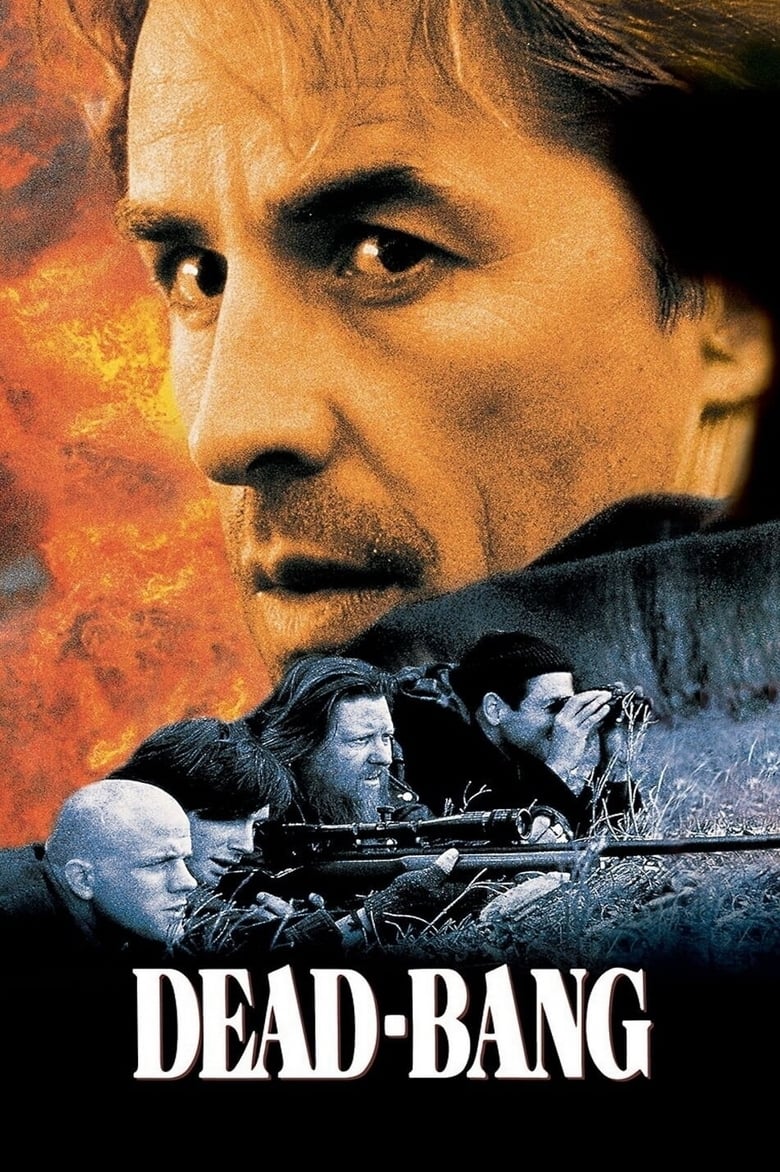
Dead Bang (1989) arrives with the coordinates of a film ou téléfilm criminel film situated in 1980s cinema. The record credits John Frankenheimer with the direction and places Don Johnson and Penelope Ann Miller in the foreground. With a contained running time, the useful question is not to invent an invisible intention, but to notice how these documented choices shape audience expectations before the first frame.
Read as thriller, the film carries the pressure of investigation. Investigation becomes a conflict between what can be proved, what can be narrated, and what a community is willing to believe. The most precise critical test is therefore how each piece of evidence also changes the person reading it. Visual scale is a promise, not a conclusion. Criticism should ask whether space, cutting, and action give the characters greater weight or reduce them to markers inside a machine.
The unexpected angle follows not only the discovery of guilt, but the collective manufacture of innocence. Instead of asking whether the film confirms the expected story of justice, the sharper question is whether it changes the person, place, or institution with the power to define it. Moving the verdict means looking for the small human choice that the large machinery risks concealing.
THE VERDICT, REFRAMED
The wager: judge spectacle by the human precision it makes possible. Here, justice changes meaning under the pressure of investigation.
THE DOCUMENTARY STARTING POINT