← ALL FRESH TAKES
SOURCE-LED EDITORIAL REVIEW
SOURCE-LED EDITORIAL REVIEW
THEMATIC CENTER
griefNARRATIVE PRESSURE
creationFORM
horrorRECORD ANCHORS
makeup · effects · americanThe record for Army of Darkness yields three coordinates specific to its premise—makeup, effects, and american. That vocabulary places grief at the center and gives creation its dominant tension. It establishes a documentary baseline, not a borrowed score; criticism must still ask what the form does with that material.
Army of Darkness brings grief into contact with creation through horror. That intersection is our Fresh Take: judge the premise less by its familiarity than by how precisely that combination makes its conflict legible. The existing editorial note adds this view: A comedy best met with an open mind: rhythm, performance and the pleasure of a shared audience take centre stage.
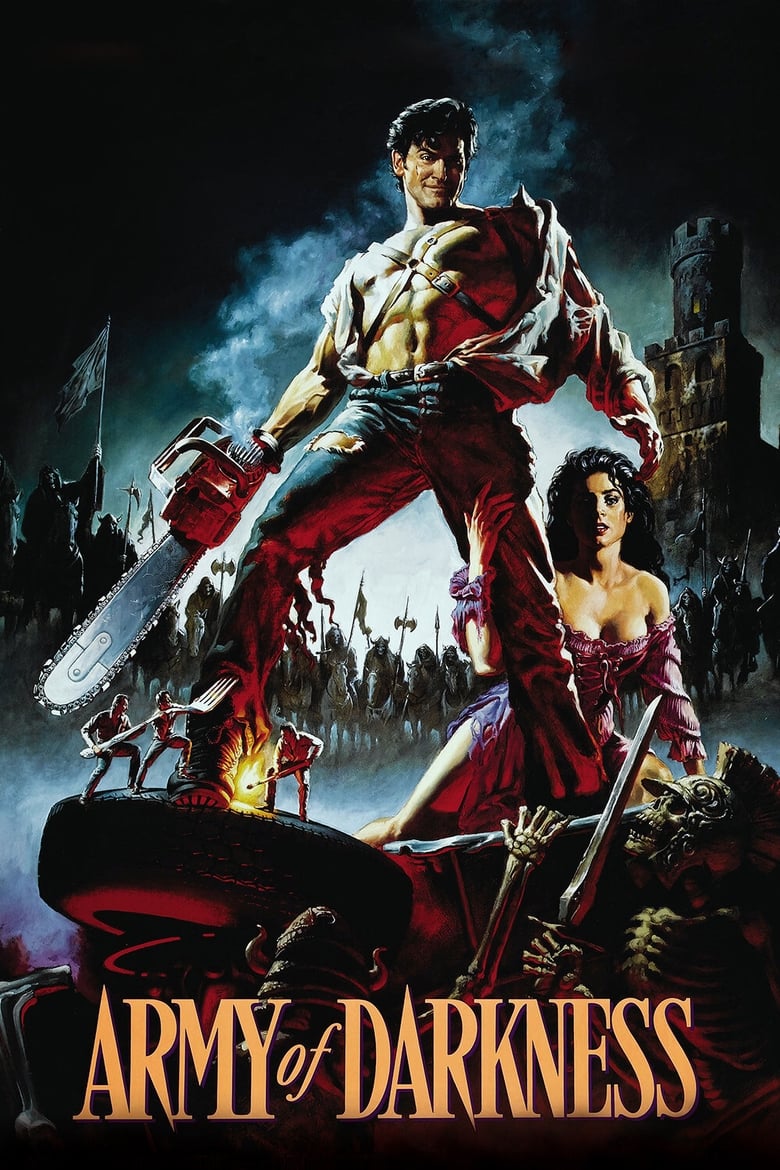
Army of Darkness (1992) arrives with the coordinates of a film et téléfilm de fantasy film situated in 1990s cinema. The record credits Sam Raimi with the direction and places Embeth Davidtz and Bruce Campbell in the foreground. With a contained running time, the useful question is not to invent an invisible intention, but to notice how these documented choices shape audience expectations before the first frame.
Read as horror, the film carries the pressure of creation. Grief does not move in a straight line; it reorganizes objects, places, and ordinary gestures until absence acquires material presence. The most precise critical test is therefore the human cost of the creative act beyond its result. The comedy label promises pleasure, but it also opens a social laboratory. Who controls the rhythm, who becomes the object of the joke, and who recovers dignity offer a more durable reading than a simple gag count.
The twist looks not at disappearance itself, but at the new world the survivors construct around its absence. Instead of asking whether the film confirms the expected story of grief, the sharper question is whether it changes the person, place, or institution with the power to define it. The twist is relational: timing matters because it quietly redistributes authority between characters.
THE VERDICT, REFRAMED
Our angle: the best joke may be the one that quietly changes a human relationship. Here, grief changes meaning under the pressure of creation.
THE DOCUMENTARY STARTING POINT